India
After spate of food poisonings, Ashram School Central Kitchens Under Fire
Over 100 tribal students at three Ashram schools in Amravati suffer food poisoning.

TLDR;
- Over 100 tribal students at three Ashram schools in Dharni reportedly food poisoned with food supplied by a centralised kitchen.
- Activists allege that transporting cooked meals for hours can compromise food quality.
- Maharashtra’s Tribal Development Department launched the centralised kitchen initiative in 2015 with Tata Trust and Akshayapatra Foundation.
- Activists have alleged that students receive spoiled fruits, unrefrigerated milk and poorly cooked chapatis.
- Activists argue that centralised menus overlook local dietary habits and that local cooking previously provided fresher food as well as employment.
- Dharni ITDP Project office said food from the kitchen will not be served until investigations are complete.
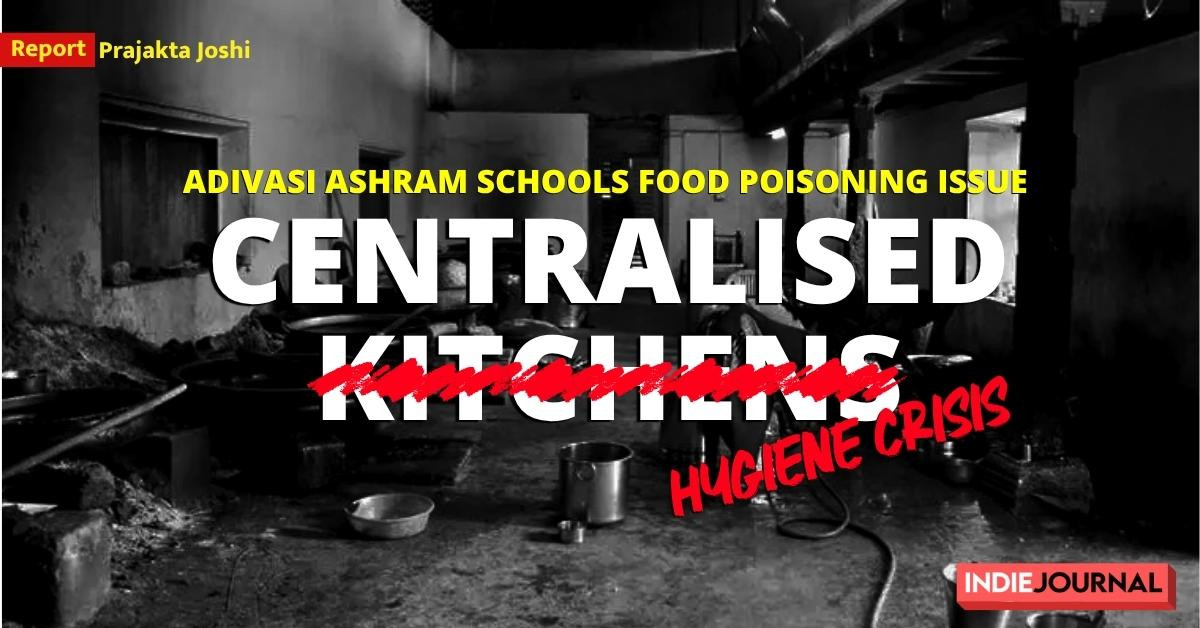
Following reports that several students at three Ashram schools in Amravati district suffered food poisoning after having meals brought in from a centralised kitchen, activists have again questioned the need of this ‘experiment’ which involves transporting food from long distances instead of preparing it locally. Earlier this week, over 100 students at Titamba, Bijudhawadi and Sawalikheda Ashram schools under Integrated Tribal Development Project (ITDP) in Dharni suffered from stomachache, nausea and diarrhea. This happened allegedly after having meals that came to their schools from the centralised kitchen in Dharni. While six arrests have been made in this regard, activists in the area have pointed out issues regarding the quality of the food being served to the adivasi students.
“All the meals that the children eat at the Ashram Schools in our area come from the centralised kitchen in Dharni. The food has to travel anywhere between half an hour to a couple of hours to reach the schools from the kitchen. The food often starts spoiling during transport,” Rohit Zakarde, an activist in the area, who brought the issue to the forefront, told Indie Journal.
He said that on Sunday, a few students at the Titamba Ashram School in Dharni taluka began complaining of stomach ache and nausea after eating.
“Some of them started vomiting, they got diarrhea. So they were brought to the hospital for treatment. That is how it was revealed that they were suffering from food poisoning,” Zakarde said.
He said that after this, students from Bijudhawadi Ashram School as well as Sawalikheda Ashram School also started showing symptoms and had to be taken to the hospital. All these schools were provided food from the same centralised kitchen operated in Dharni.
However, on being questioned about the same, Siddharth Shukla, Project Officer at the Dharni ITDP said that of all the students who were admitted, 95 percent students only suffered stomach ache and nausea, very few had diarrhea.
“While some students did suffer symptoms, for many others, it looked like mass hysteria. The students were scared when their friends got sick and that caused panic among them and their parents. However, we are taking this incident very seriously. Until we do not inspect the food thoroughly, we will not be serving this food to our students. People have expressed their concerns about the food and right now, our focus is on building their trust back and bringing the students back to the schools,” Shukla said.
"While some students did suffer symptoms, for many others, it looked like mass hysteria."
He also added that on day 1, when the students from Titamba Ashram School complained, eight other schools were served food from the same kitchen.
“We have not received any such complaints from most of the other schools. However, FIRs have been registered and we will not be serving that food until the investigation is complete,” he said.
However, Zakarde alleged that the other schools might be afraid of coming forward. “Students from other schools where the food is sent from the same kitchen have also suffered such symptoms. However, their headmasters have not revealed it fearing punitive actions like suspension,” he alleged.
Neither the activist nor Indie Journal could verify who was the contractor who ran the centralised kitchen. However, local news reports said that its owner Vijay Bothare, a representative Sachin Satpute, the cook and a few other employees have been booked by the Dharni police.
The issue of centralised kitchens
The centralised kitchen project called ‘Annapurna’ was initiated by the Tribal Development Department in Maharashtra in 2015, in partnership with Tata Trust and Akshayapatra Foundation. While the pilot project began in 29 schools, it was later extended to several other schools across the state. Before this, all the meals for the students were prepared at the Ashram Schools itself.
“When the food was made locally, at the Ashram Schools, the responsibility of buying groceries, storing them properly, maintaining staff, ensuring hygiene, all befell upon the headmasters of these schools. Over 10 years ago, their organisations demanded that the headmasters be relieved of this responsibility, so that they could focus on their primary task of managing the school. This was one of the reasons behind the inception of centralised kitchens,” said Avinash Gawari, Treasurer, Pune district, Democratic Youth Federation of India (DYFI).
DYFI, the youth wing of Communist Party of India (Marxist) and the Students Federation of India (SFI) have been protesting against the centralised kitchens for a long time.
“Even if you see the example of Pune district, there is only one centralised kitchen located in Ghodegaon (Ambegaon taluka) that supplies cooked food to the Ashram Schools in the entire district - in Ambegaon, Junnar and Maval. The food sometimes has to travel around 50 to 60 kms before it reaches the students. The contracts state that the food must be transported in air conditioned vehicles. However, the contractors seldom follow this and use simple vans for the same. Thus, we have seen several instances wherein the food was spoiled by the time it reached the schools,” Gawari added.
“Imagine food being cooked at 3-4 am in the morning, and then being transported for a couple of hours, so that it can be served to the students as breakfast at 8 am. Similarly, imagine lunch, comprising foods like dal that get spoiled easily, being cooked early in the morning so that they can reach the schools before noon. That’s how the centralised kitchens operate,” Zakarde said.
Gawari further said that whenever any such cases come forward, the government usually carries out inspection at the kitchens. “The quality of food at these kitchens might be great, but what about the issues of transportation? No one asks that question,” Gawari added.
Food Quality Under Question
Gawari also spoke about the larger issue of the quality of the food that comes from these kitchens, which Zakarde had also pointed out. Zakarde has produced videos and alleged that the schools receive perishable fruits like bananas and apples altogether once in 15 days or so. “How will these fruits remain fresh for 15-20 days, that too without a refrigerator? Just to finish off the supplied bananas, the students are served blackened, half rotten bananas. Even the milk that is given to the students comes in bulk every four-five days, and is stored without refrigeration,” he alleged.
Narrating his observations from Pune district, Gawari said, “Kids might not always get food poisoning, but that does not mean that the food that they receive is in a great condition. The chapatis that these kitchens provide are prepared in huge machines that make around 150-200 chapatis at once. We have seen that these chapatis are often not roasted well on both sides. This might lead to them getting spoiled during the transport. Also, they put oil over the chapatis after they are roasted, leading to the students consuming raw oil.”
“Kids might not always get food poisoning, but that does not mean that the food that they receive is in a great condition."
He said that when the food was prepared locally, not only would the students get access to fresh warm food, but locals would also get employment in cooking, cleaning, etc. The local cooks would also buy food from the local markets, unlike the centralised kitchens which buy in bulk at the larger markets only.
Both the activists also pointed out that the centralised kitchens determine the diet, without taking into consideration the local dietary patterns or habits. “The menu is set by the centralised kitchen, it usually comprises rice, dal, chapatis and vegetables,” Zakarde said.
Gawari said that earlier, several locally available and locally sourced ingredients, that are part of the dietary habits of the students, would be part of the meals provided to them at the school. “However, now that factor is not taken into consideration, which might also affect the nutrition that these kids get,” he added.
When asked about the issues of transport and food quality pointed out by the activists, Shukla said, “Ashram Schools are crucial for the educational development of tribal areas. We are going to thoroughly investigate the food provided by the centralised kitchen. We will not hesitate to even stop this experiment if necessary. The schools are the most important, right now our priority is bringing the students back.”