Opinion
Thanks to the students, India's Democracy found breath
Given its magnitude, the CJP protest has the potential to go beyond its immediate issue.

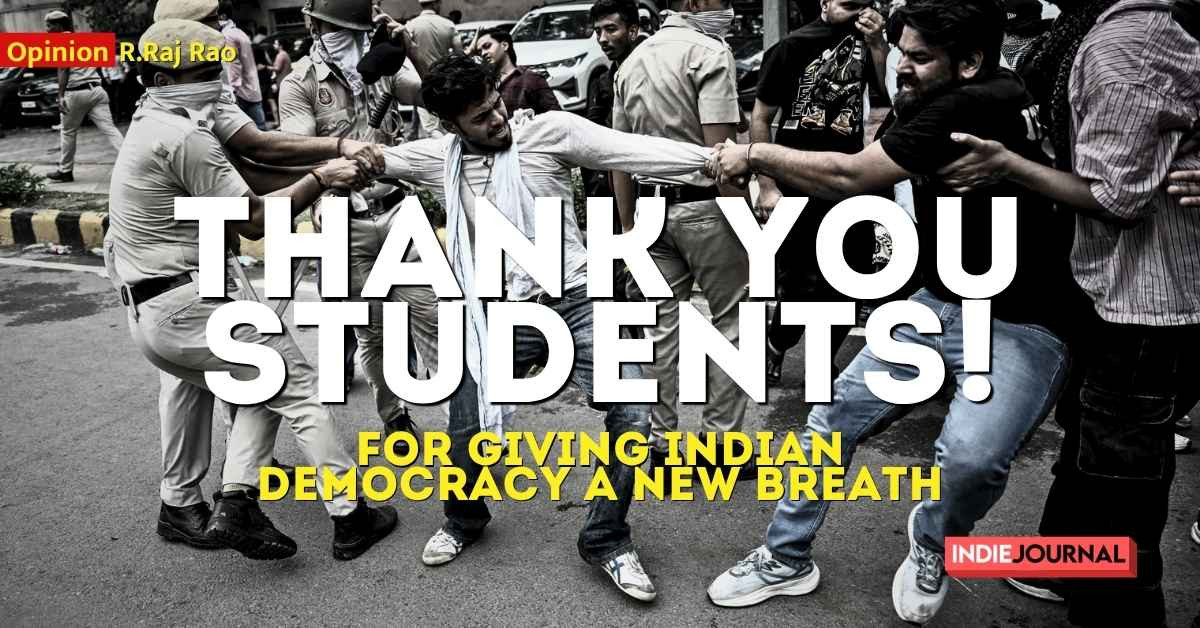
R. RAJ RAO | In getting the police to fire tear gas shells and lathi-charge CJP protestors who gathered at Jantar Mantar, and marched peacefully towards Parliament, the Modi government just stopped short of its Jallianwala Bagh moment. On 13 April 1919, General Reginald Dyer opened fire at Rowlatt Act protestors who had gathered at Jallianwala Bagh, killing and injuring thousands. Had the armed policemen in Delhi opened fire, young lives would doubtless have been lost, inviting comparisons with Jallianwala Bagh.
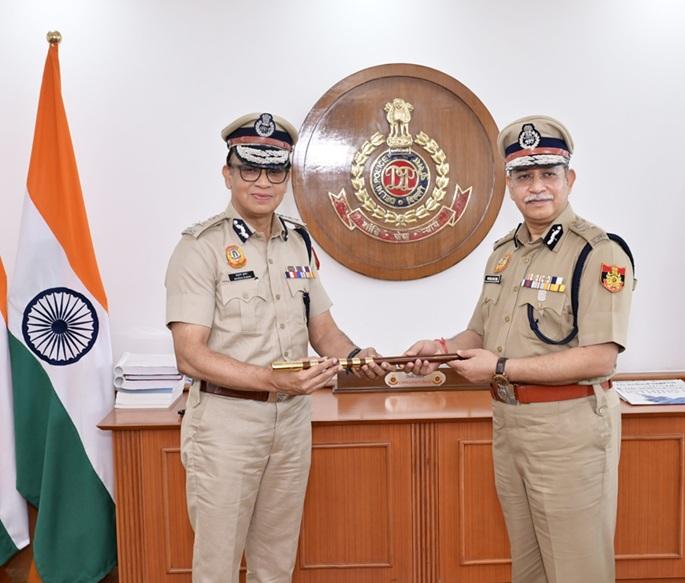
That the government planned to use force to disrupt the protest was evident when the Home Ministry abruptly transferred Delhi Police Commissioner Satish Golchha, and replaced him with Anurag Kumar only a few days before Parliament’s monsoon session was to begin. It was the day when the CJP planned its protest march.
The government seems to have felt that Golchha didn’t handle the protestors, and Sonam Wangchuk who supported them by going on a hunger fast, with an iron hand.
If the demand of the Jallianwala Bagh agitators was abolition of the Rowlatt Act, that of the CJP was resignation of the Education Minister, Dharmendra Pradhan. The NEET exam paper leak not only deprived meritorious students of a seat in medical colleges, but it also led to suicides among some twenty of them who had failed the exam as a result of the scam.
Now this was serious. The government could have capitulated and replaced Pradhan with someone else, just as they replaced Golchha with Anurag Kumar. It would have mollified the students, at least for the present.
The government could have capitulated and replaced Pradhan with someone else, just as they replaced Golchha with Anurag Kumar.
Kumar’s first ‘violent’ act was to forcibly whisk Wangchuk away from Jantar Mantar and get him admitted to Safdarjung Hospital. As Wangchuk’s wife Gitanjali Angmo has said, he did not want to be treated, nor did he want to be taken to Safdarjung Hospital. This was done against his will, which, unfortunately, even the judiciary did not seem to realize, for they saw nothing wrong in the government’s move.
Kumar’s second violent act, of course, was to get his men to fire tear gas shells and lathi-charge the student protestors at Sansad Bhavan. This could have been handled differently.
What came later in the day could have happened at the start. J.P. Nadda could have met CJP representatives in the morning itself, and they could have been told that Amit Shah was meeting Dharmendra Pradhan for talks. According to some news reports, the meeting eventually happened, but only after pandemonium had already broken out.
The BJP fears eating crow. They had to eat crow in the past when the farmers’ agitation led to a withdrawal of the farm laws, much against their will. More recently, they had to eat crow during Parliament’s last session, when they failed to pass their delimitation bill which did not have the support of the opposition. Their wounded ego was palpable at both times.
Given its magnitude, the CJP protest has the potential to go beyond its immediate issue - resignation of Dharmendra Pradhan - and serve as a catalyst for other things that threaten to undermine the Constitution. Delimitation remains one such thing.
By managing to increase their strength in the Lok Sabha, so that they have a two-thirds majority, the BJP might succeed in passing the delimitation bill this time around. But perhaps the CJP protest may impel MPs from other parties who plan to defect to the BJP to do a rethink. After all, the protesting students could be their own offspring. In which case, the delimitation bill won’t be passed, and, as Yogendra Yadav would say, democracy will be given another chance.
R. Raj Rao is a writer and academic based in Pune.